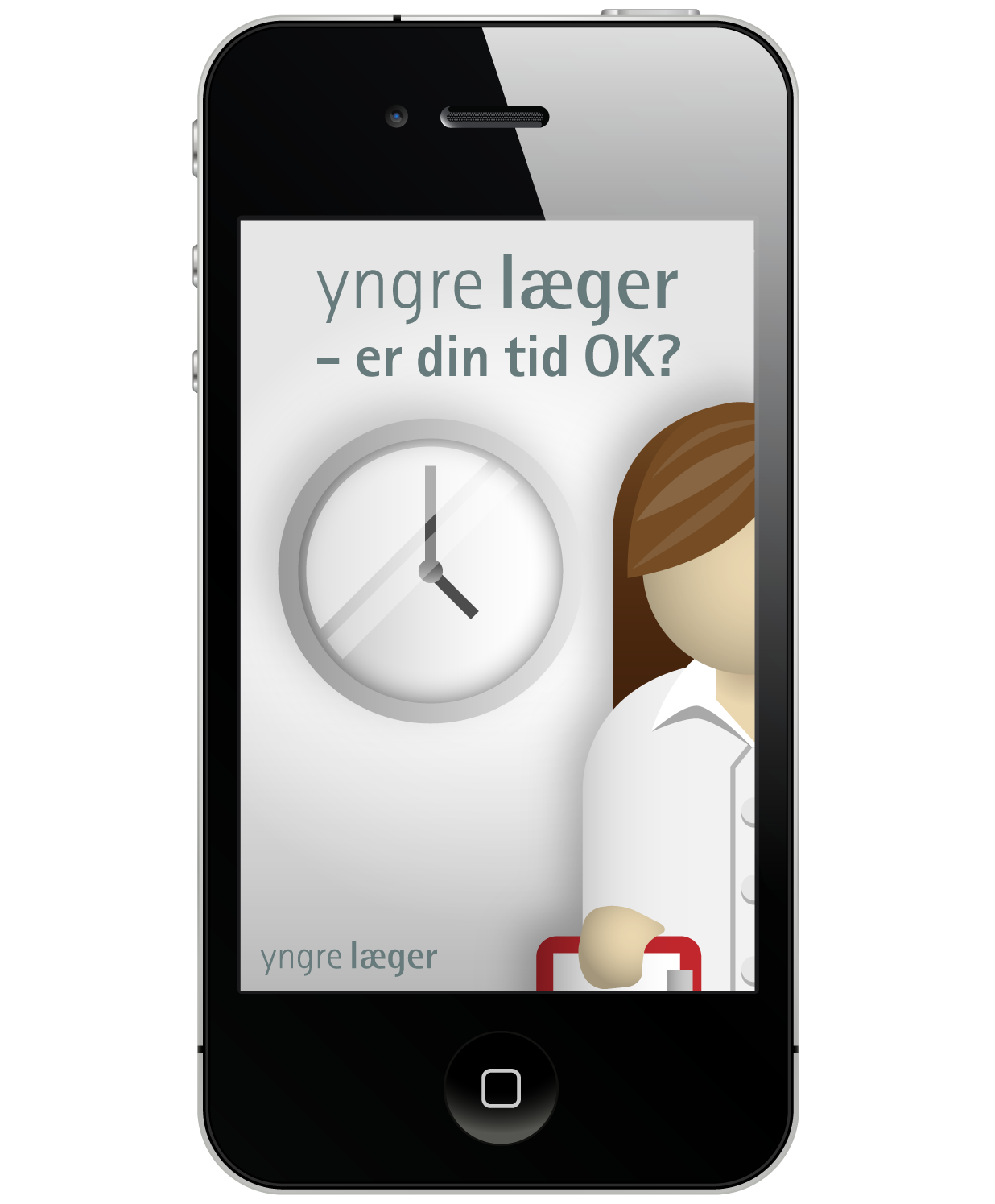
Yngre Læger – Er Din Tid Ok? is a time tracking application developed for Foreningen Yngre Læger (The Danish Junior Doctors Association) which counts roughly 11.000 members.
The project was conceived in 2012 due to many years of hospital doctors expressing frustration over their complicated union regulations – a bible-thick tome of complex, intertwining rules governing mandated rest periods, shift durations, assignment types, etc. which made it near-impossible for them figure out if rules were being broken when unplanned emergencies collided with their regular shifts and rest periods. In short, a hospital doctor’s workday usually never ends up the way it was scheduled and the members of the organization needed a system to keep track of all the rules for them, so the only thing doctors had to do was report their hours.
This app does exactly that. It enables doctors to quickly and easily enter their schedules and make day-to-day alterations if their day ends up deviating from the plan. The app keeps track of the quite massive ruleset of the union accord and alerts the user when rules are being broken. Everything comes colour coded for quick overview and the app also sports a handy statistics module.
I worked as the lead on the project. I participated in interviews with the doctors, designed and wrote the specifications for the app, provided final assets and managed our small Ukranian development team. The app is available for both iOS and Android.
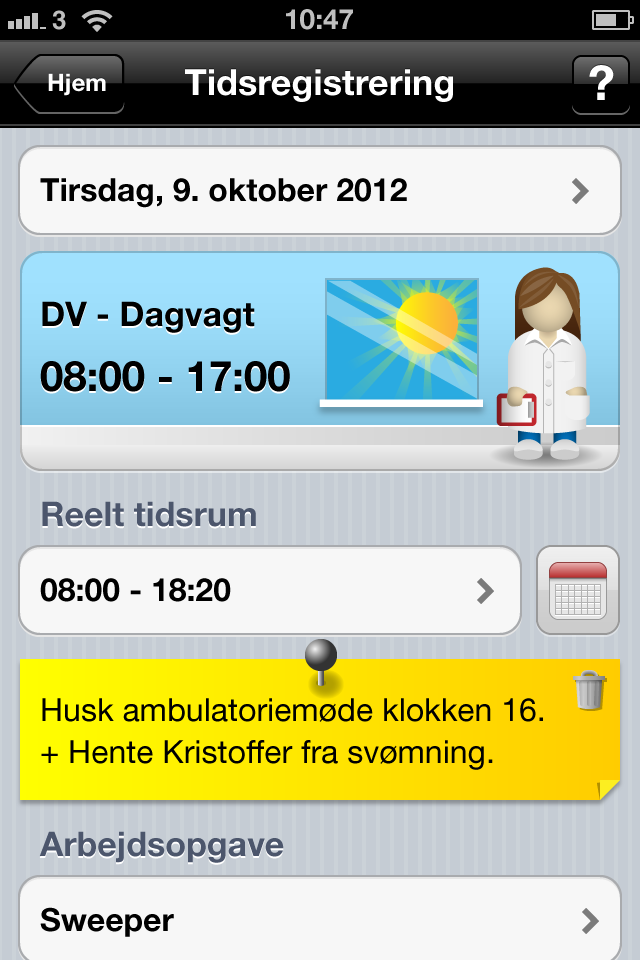
Above: The Track Time function allows doctors to input deviations to their planned workdays.
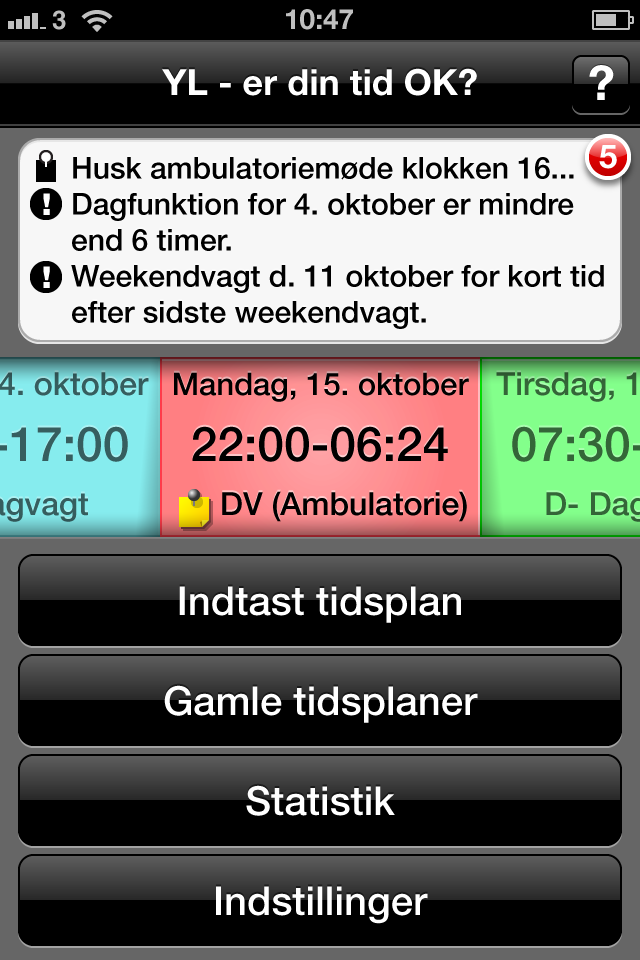
Above: The home screen provides a quick overview of the current day and features a scrolling band in the middle for easy access to past and future dates.
Newest reminders as well as conflicts with the union accord appear at the top of the screen. Tapping the field reveals the full list of messages and tapping each of these will show more information on how to solve the conflict.
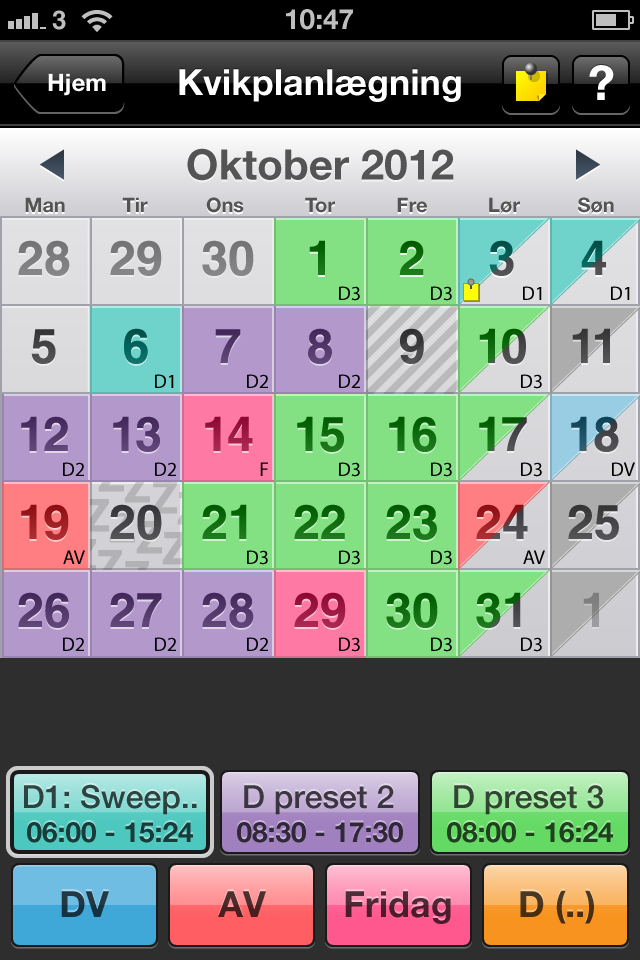
Above: Recognizing the fact that most doctors’ schedules consist of routine work days, the Quick Planner allows doctors to “paint” their monthly schedule into the planner with presets they filled out previously.
Applying the painting paradigm was the real game changer for the doctors, since colouring a bunch of squares is infinitely faster than typing and equally faster to decode at a glance. From a readability perspective alone, filling up the calendar matrix with esoteric medical iconography or text on a small phone would simply have made the app enormously frustrating to use in a stressful environment.
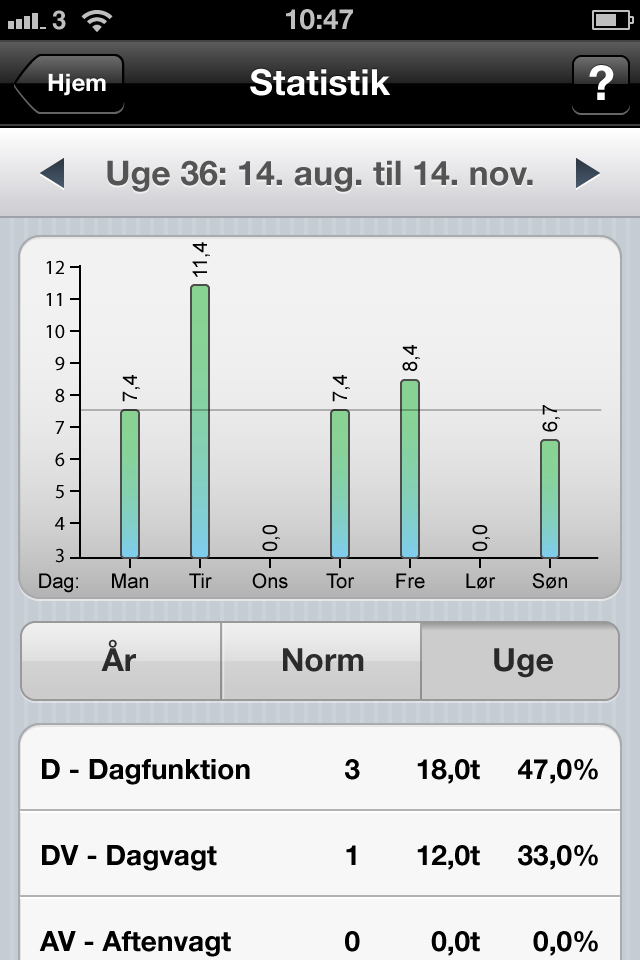
Above: The statistics module provides an overview of how doctors spend their time. This makes it easy to figure out e.g. how much overtime you’ve accumulated for the month or norm period, how many night shifts you’ve had or what types of assigments are the most frequent.
Challenges
In creating the app, we had a number of challenges to overcome. Apart from us having to translate the massive ruleset into a coded format that made changes to the accord easy to deal with, the app had to make the process of typing in your bi-weekly or monthly schedules so quick and easy it wouldn’t feel like a chore. It also needed to make everyday input of deviations to the planned schedule painless to deal with for a busy/stressed person. It had to be mobile and keep data synchronized with a central database, but at the same time could not rely on an always-on backend for calculations and storage, since most hospitals have many areas where cellular reception is either non-existant or not allowed. In other words, it had to be resilient to outages and autonomous enough to work and perform union accord checks without a connection. I’m proud to say that the finished solution handled all of these things in a graceful manner.