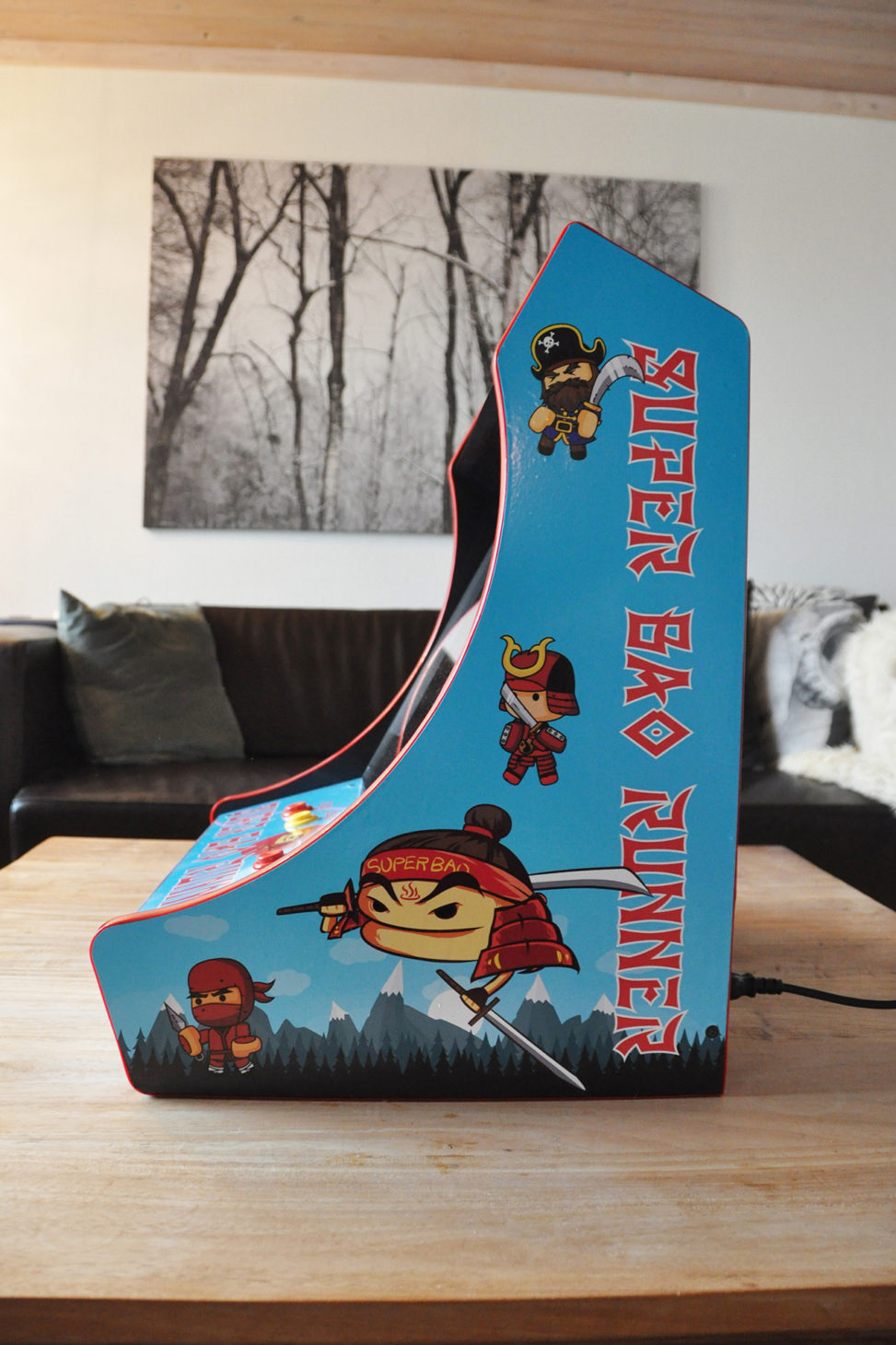
Super Bao is a chain of street kitchen restaurants in central Copenhagen and Aarhus. As part of their fast street food concept, the owners wanted something to set them apart. Showing a fondness for the fast food arcade game culture of yore, they got in touch with me and Polyspice and we pitched them an arcade game that would tie into their concept. The photos below shows the fully-functional tabletop prototype I built as a proof of concept, with the goal to roll out a number of full-sized arcade machines at all of their locations.
I created all the physical aspects of the machine, built and configured the hardware, prepared all artwork and contributed to the UI. Polyspice developed the game.
The cabinet
Note: Due to time constraints (one week for the whole project) and using pre-existing build plans for the prototype, button positions and artwork are not finalized.
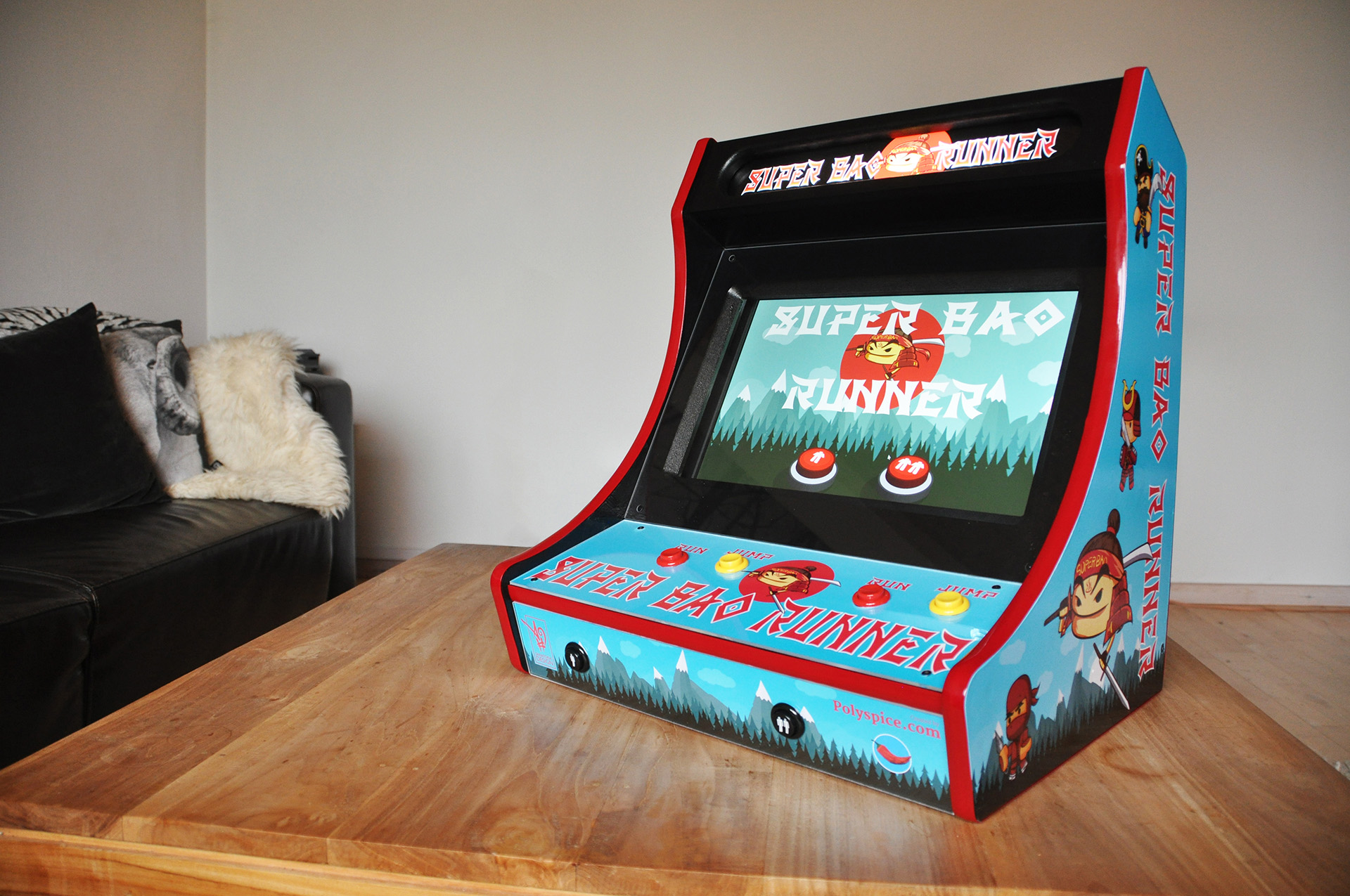 Above: The tabletop model footprint is a mere 60 x 60 x 60 cm but still leaves enough elbow room for two hungry combatants to go head to head. The cabinet is built with two video outputs – one for the screen inside and another for a big screen in the restaurant. The purpose of this secondary output will be explained in a minute.
The actual game is built in Unity and is a simple 1/2-player platform racing game (see screenshots further down the page). It’s designed for simplicity and maximum engagement with greasy fingers in mind, so it uses no sticks and only two buttons per player, requiring them to tap as fast as possible to get their character running, while still maintaining enough timing and finesse with the jump button to avoid obstacles that will cost valuable time.
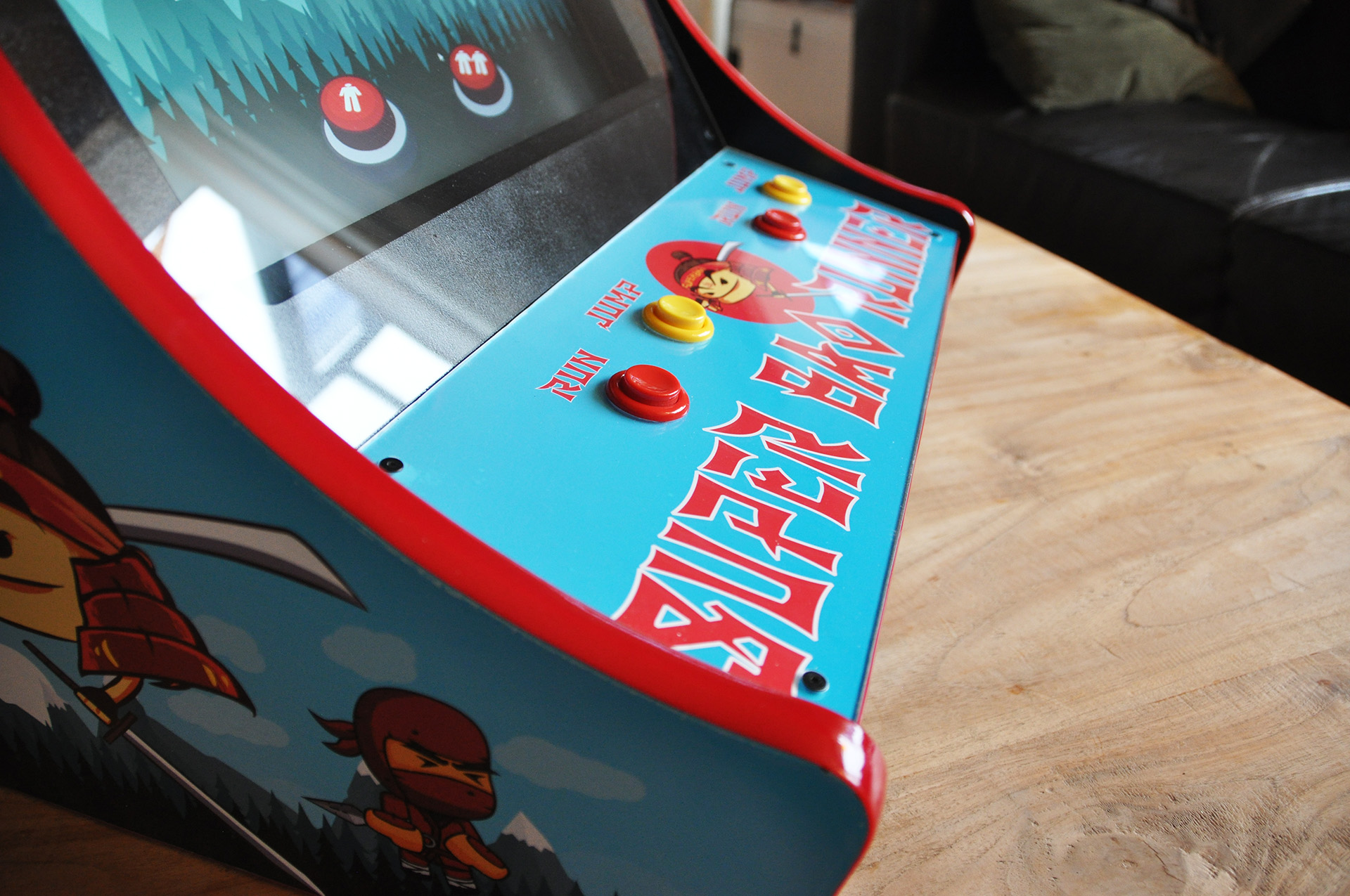 Above: In order to reduce health concerns, the cabinet is designed with heavy-duty, smooth materials to be easy to wipe down. In addition, the buttons and surfaces of the full-size cabinets will be delivered with an antibacterial/antimicrobial coating similar to what’s used in the public transportation sector.
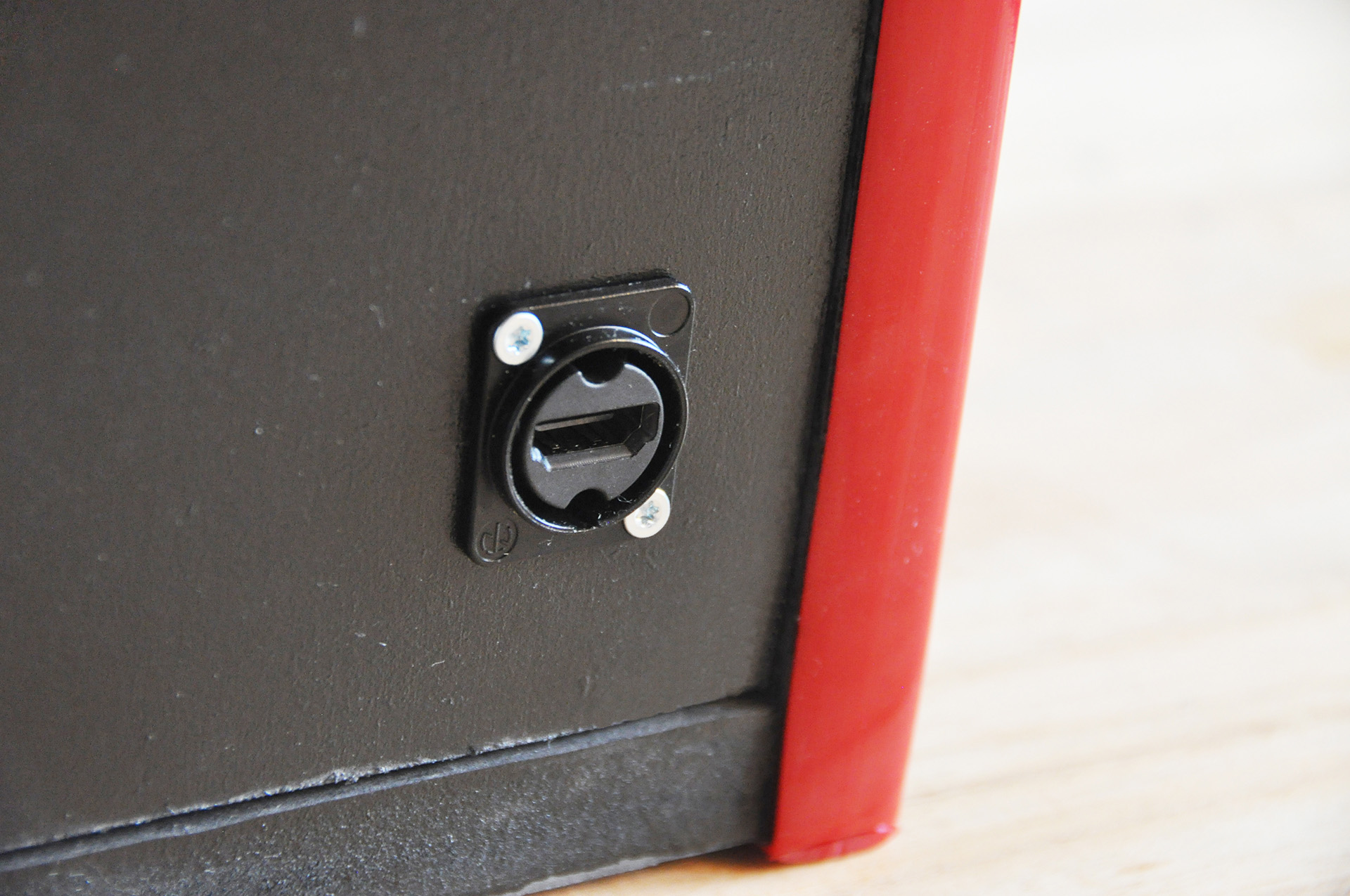 Above: The secondary video output serves a very important role. I mounted this to be reachable from the outside of the cabinet to feed into a big screen in each restaurant, showing not only the game during gameplay, but also all-time/daily/weekly high score tables with various achievements redeemable as rebates and free meals. When not in use, the machine has an unconventional attract mode on the secondary screen that also serves up ads and promotional videos for new/popular dishes being served. Essentially, the purpose of the big, secondary display is to engage spectating customers, entice them to compete and get the attention of passers-by.
All of the secondary-screen functionality is currently built directly into the game, but will eventually become a separate application, making it easy for the restaurants to update ads, offers and achievements.
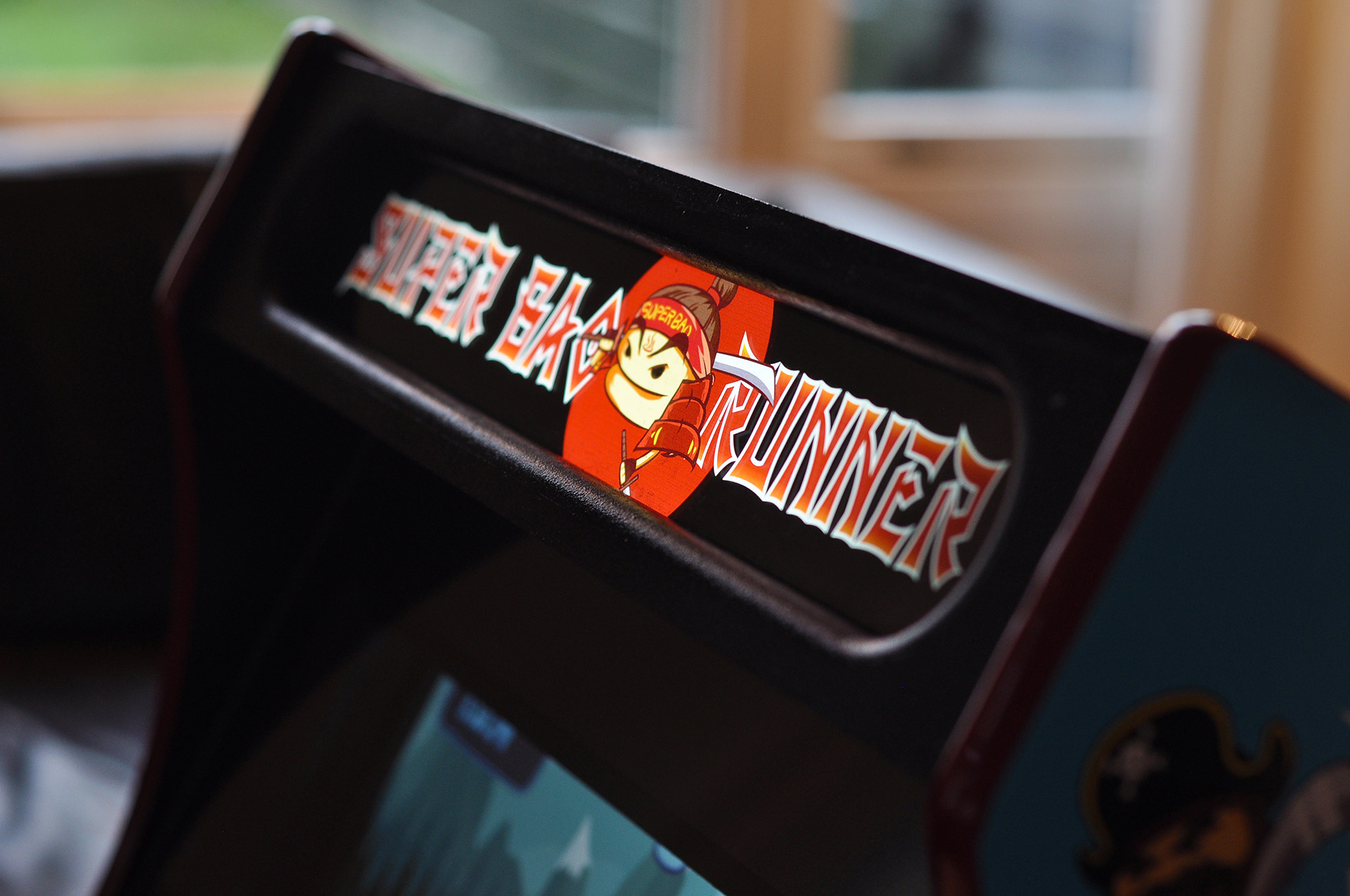 Above: The marquee lights up beautifully using white cold cathode tubes for even light distribution.
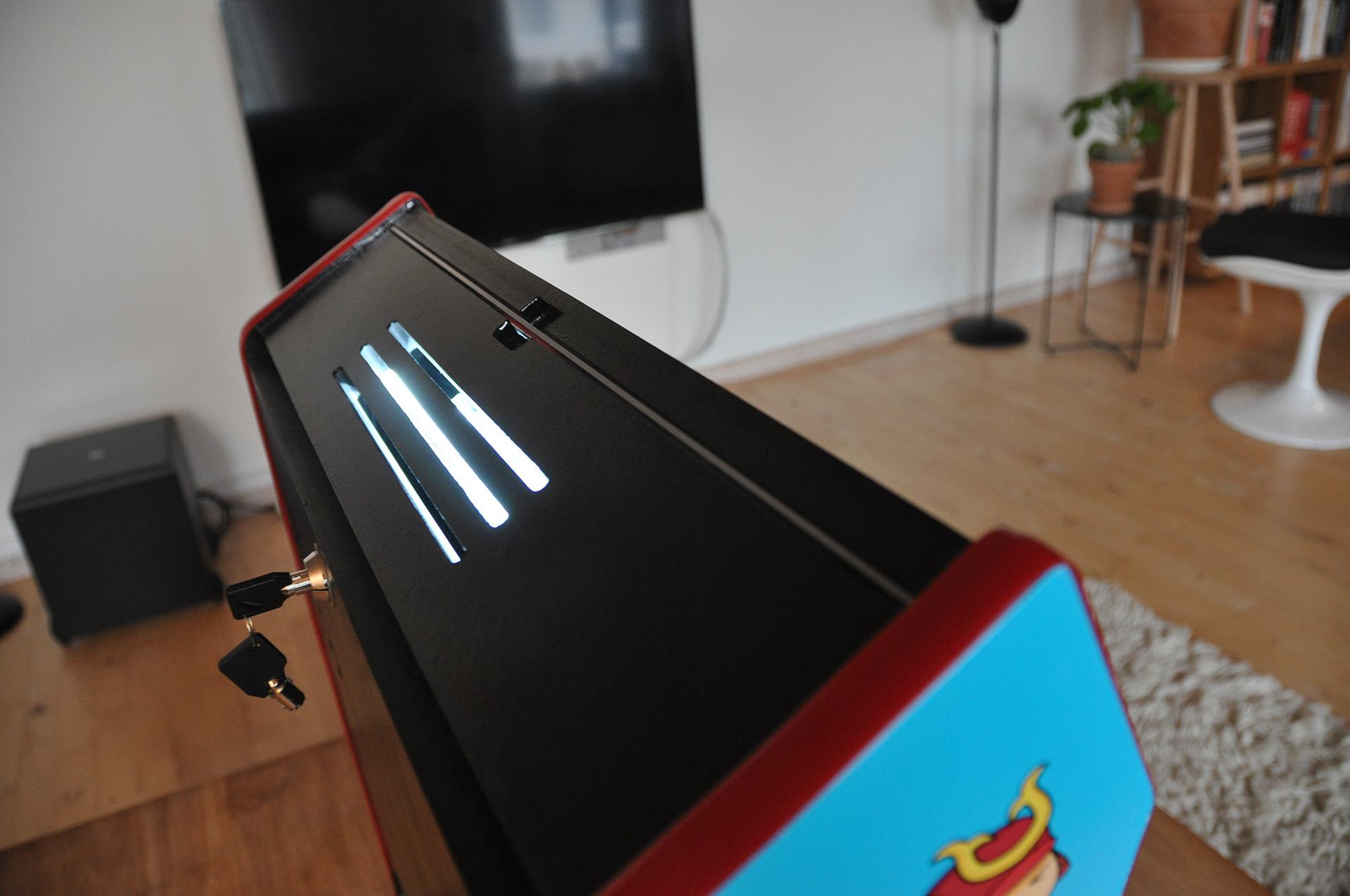 Above: The light also emanates from the heat grille at the top.
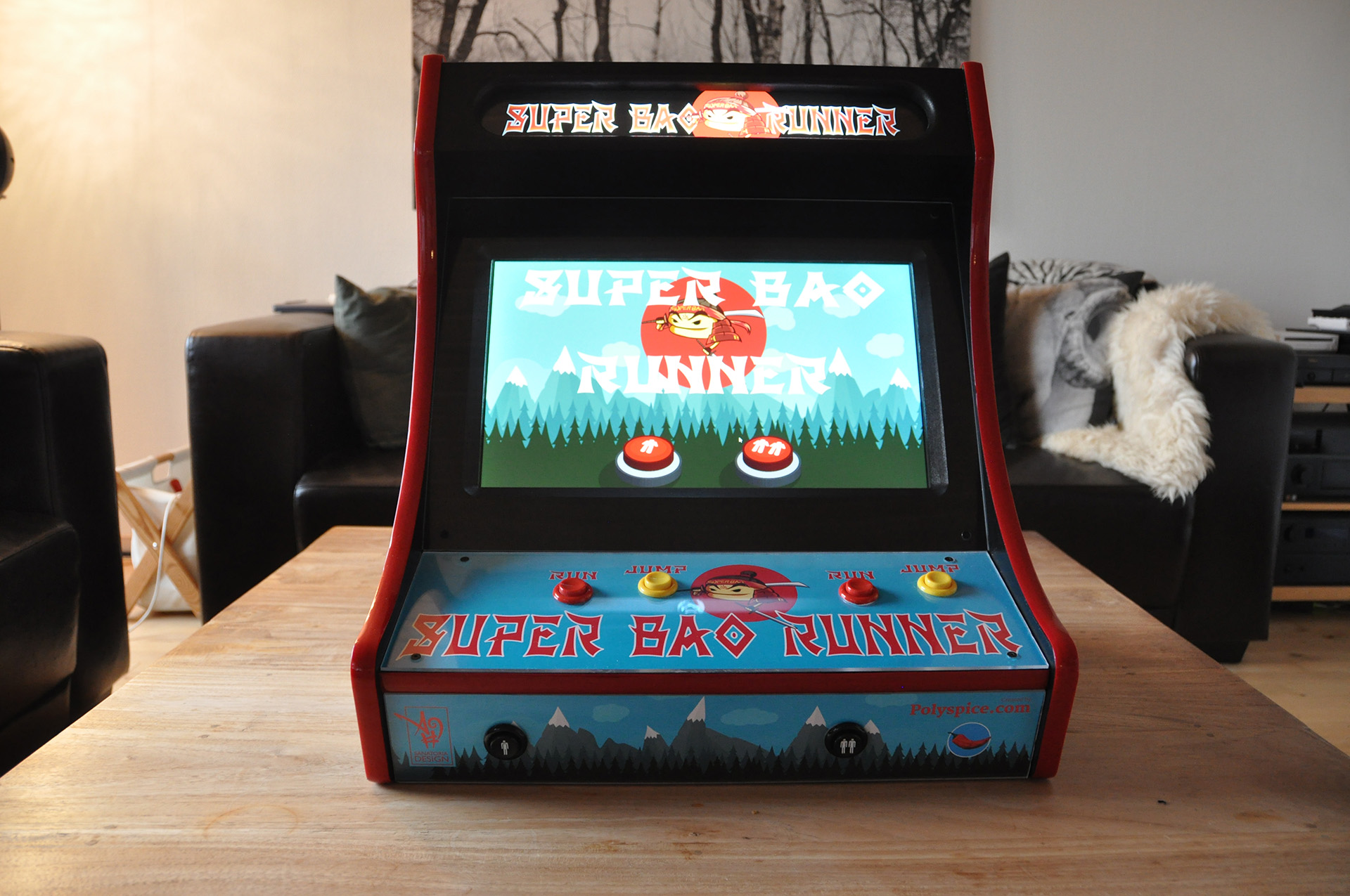 Above: The machine as viewed from the front. The camera fails to capture the proper vibrancy of the screen and marquee backlight.
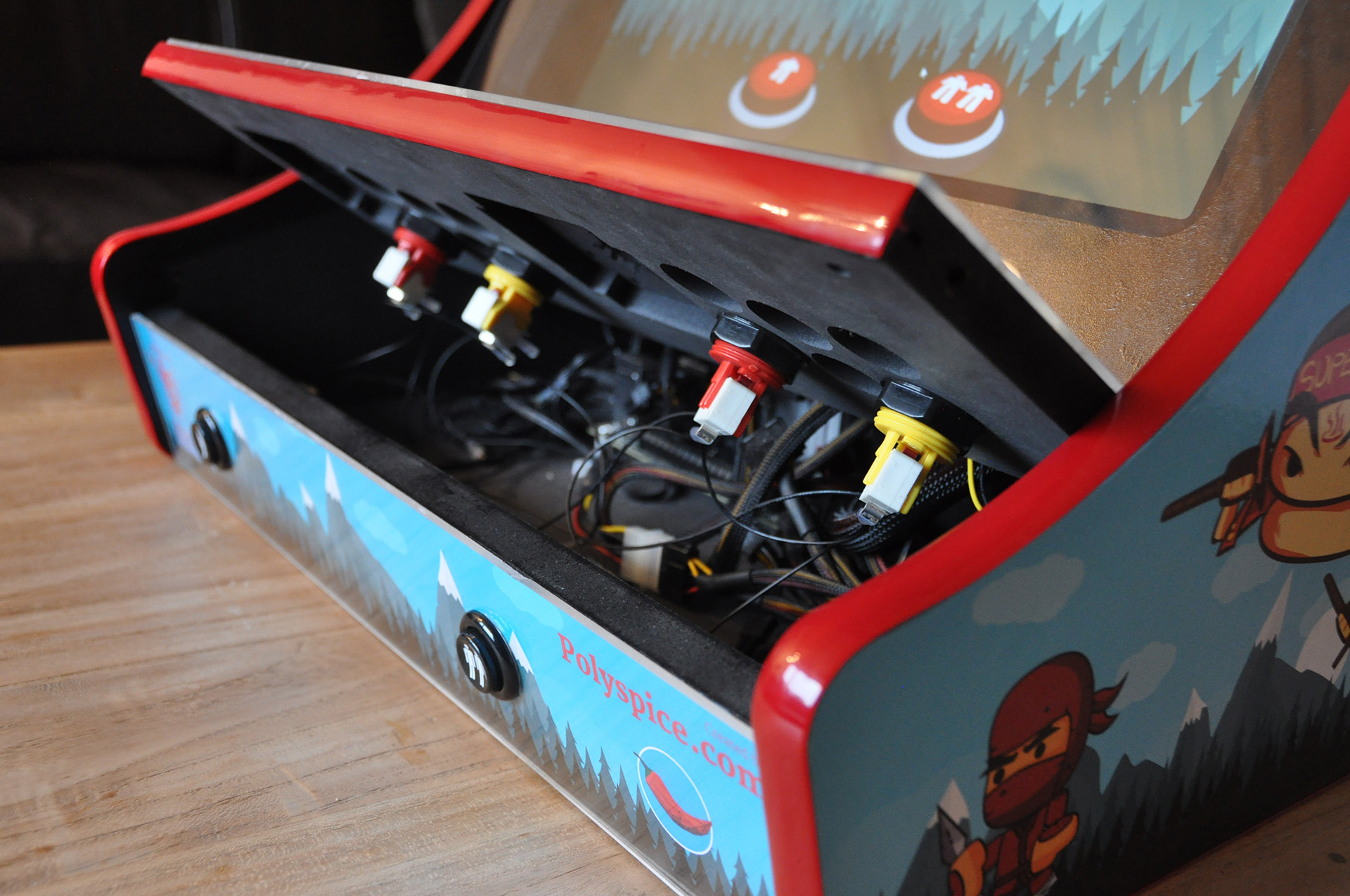 Above: The control panel can be opened for easy service, but is normally held in place with screws which can only be removed from the back.
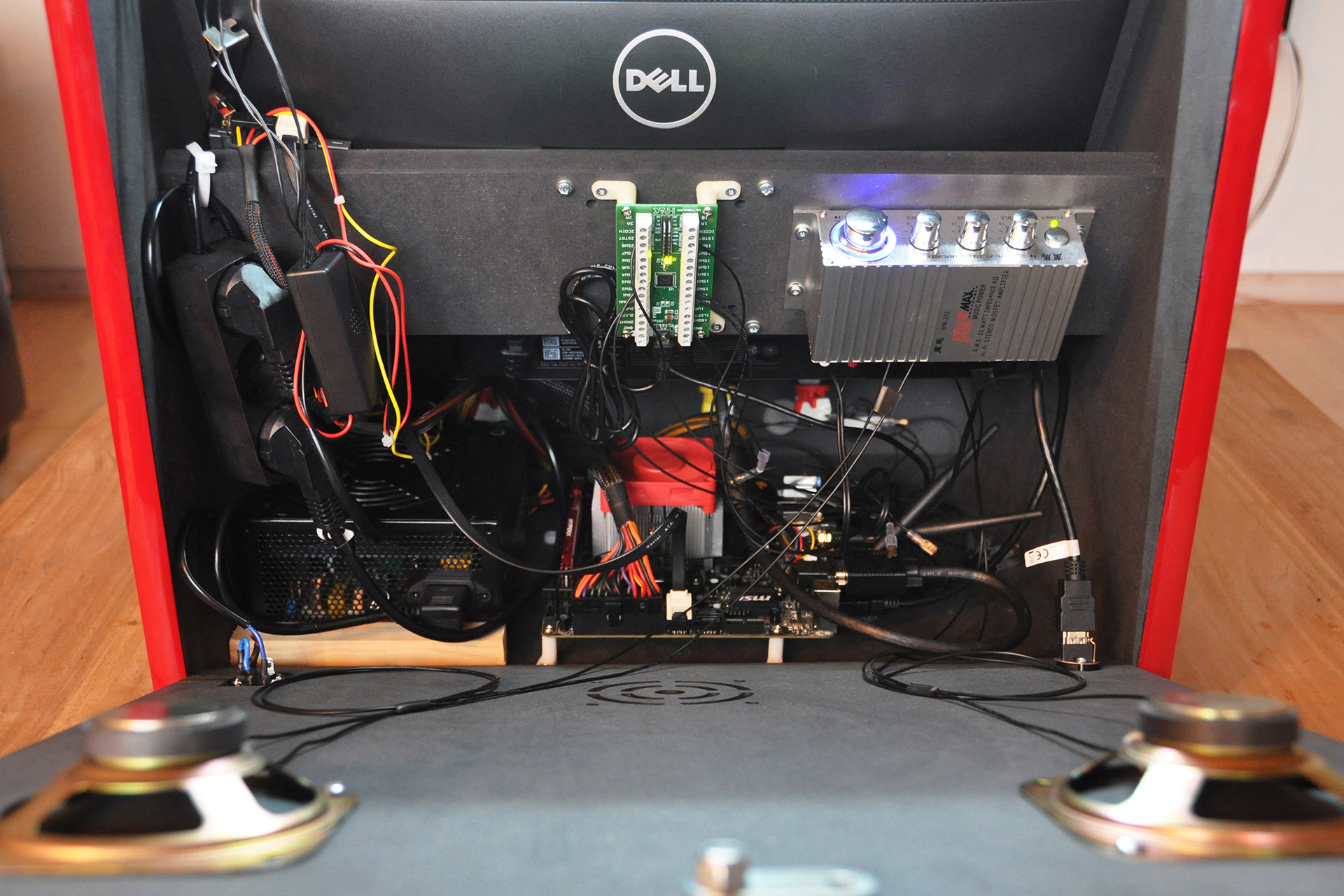 Above: The back of the machine can be opened for easy service. Due to the small form factor, speakers are not mounted underneath the marquee, but in the back, facing away from players. To keep reliability up, weight down and to make it easier to source replacement components later, I stuck with a regular LCD monitor rather than a finicky (but more period-correct) 15khz CRT monitor.
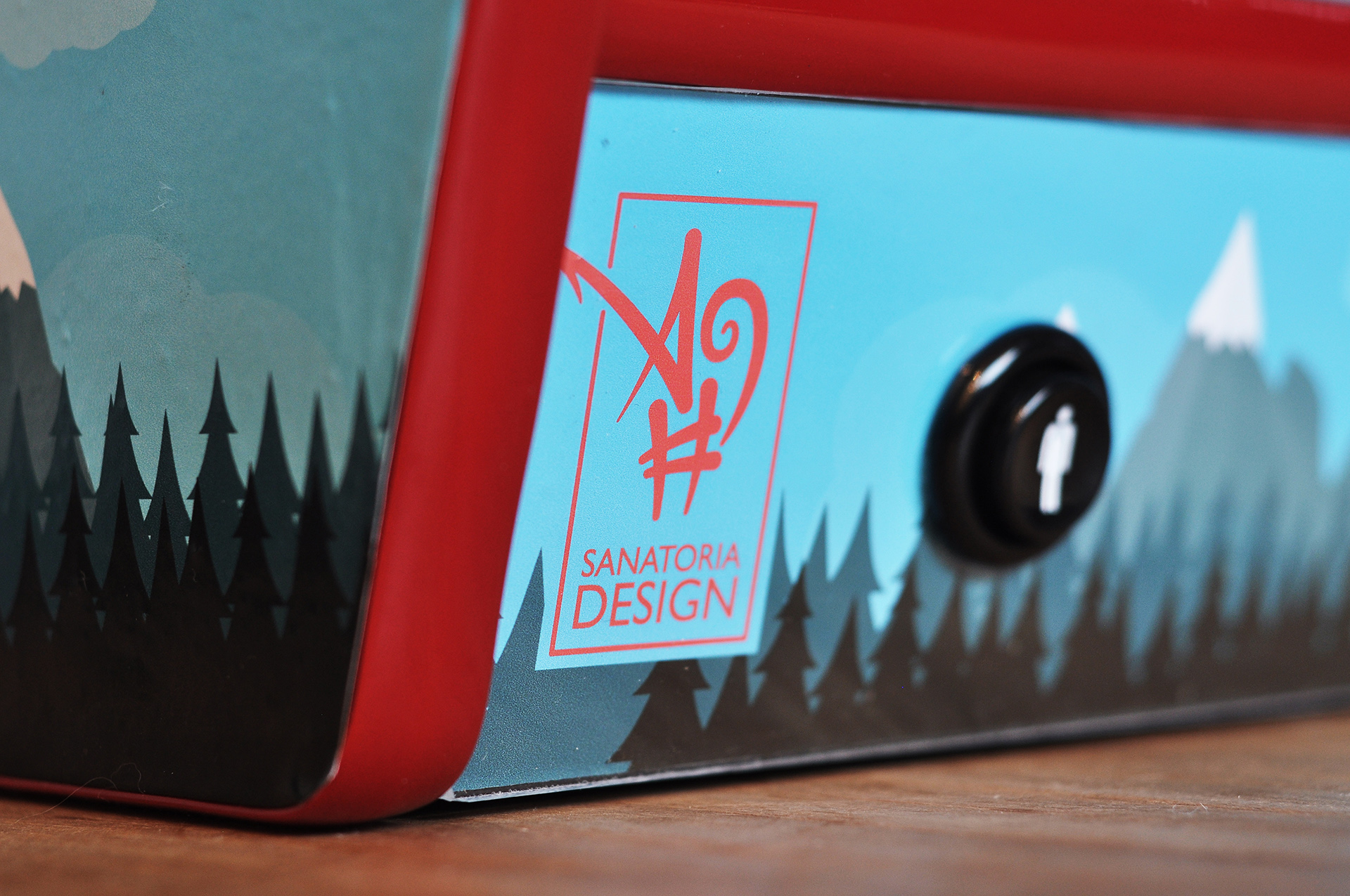 Above: Shameless self-promotion.
Game screenshots
Note: The game is still in active development and using crude, temporary artwork.
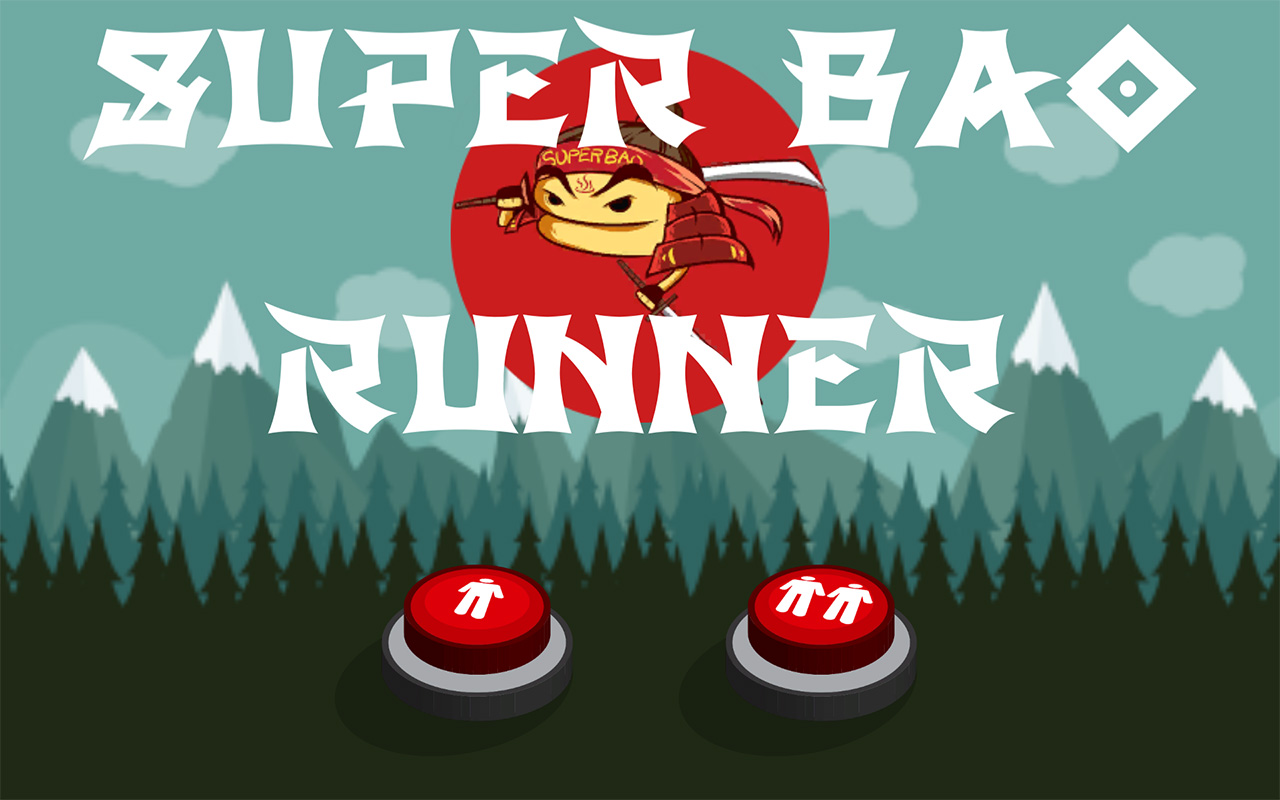 Work-in-progress: The title screen.
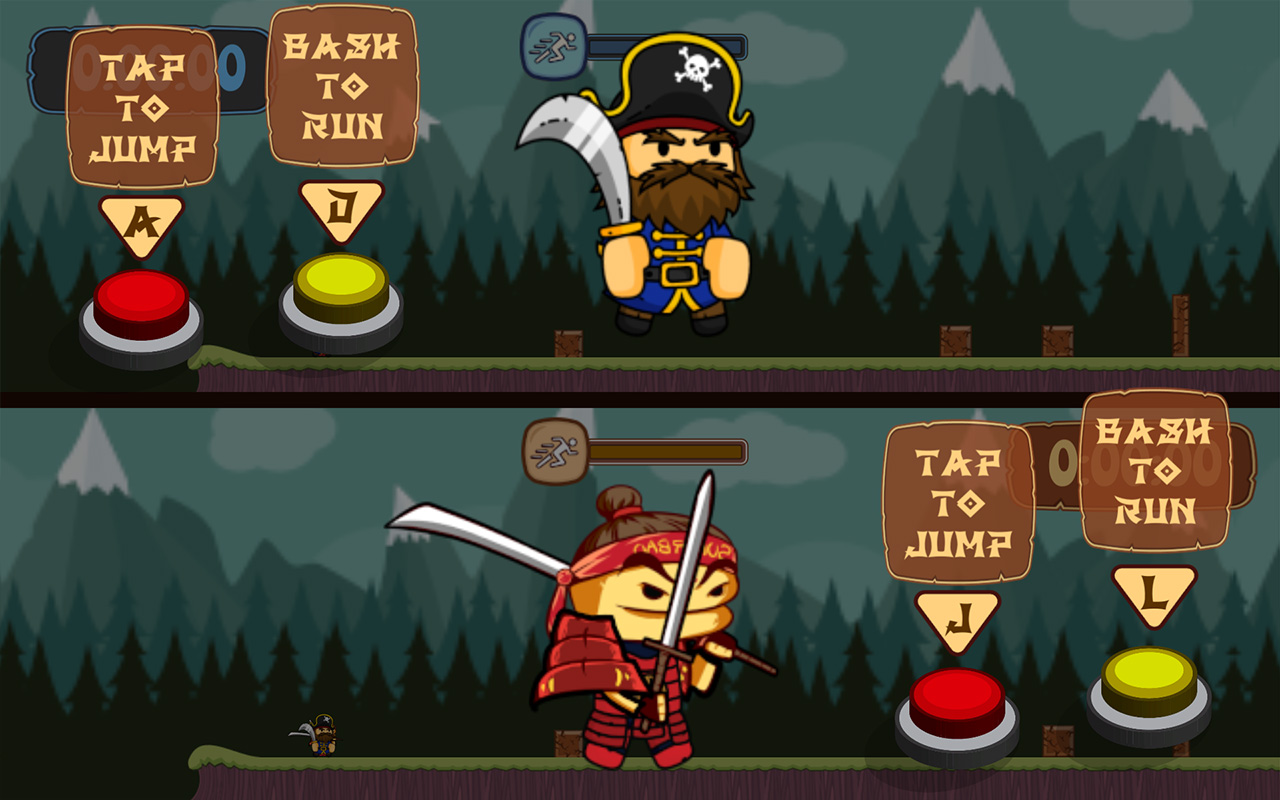 Work-in-progress: Game instructions.
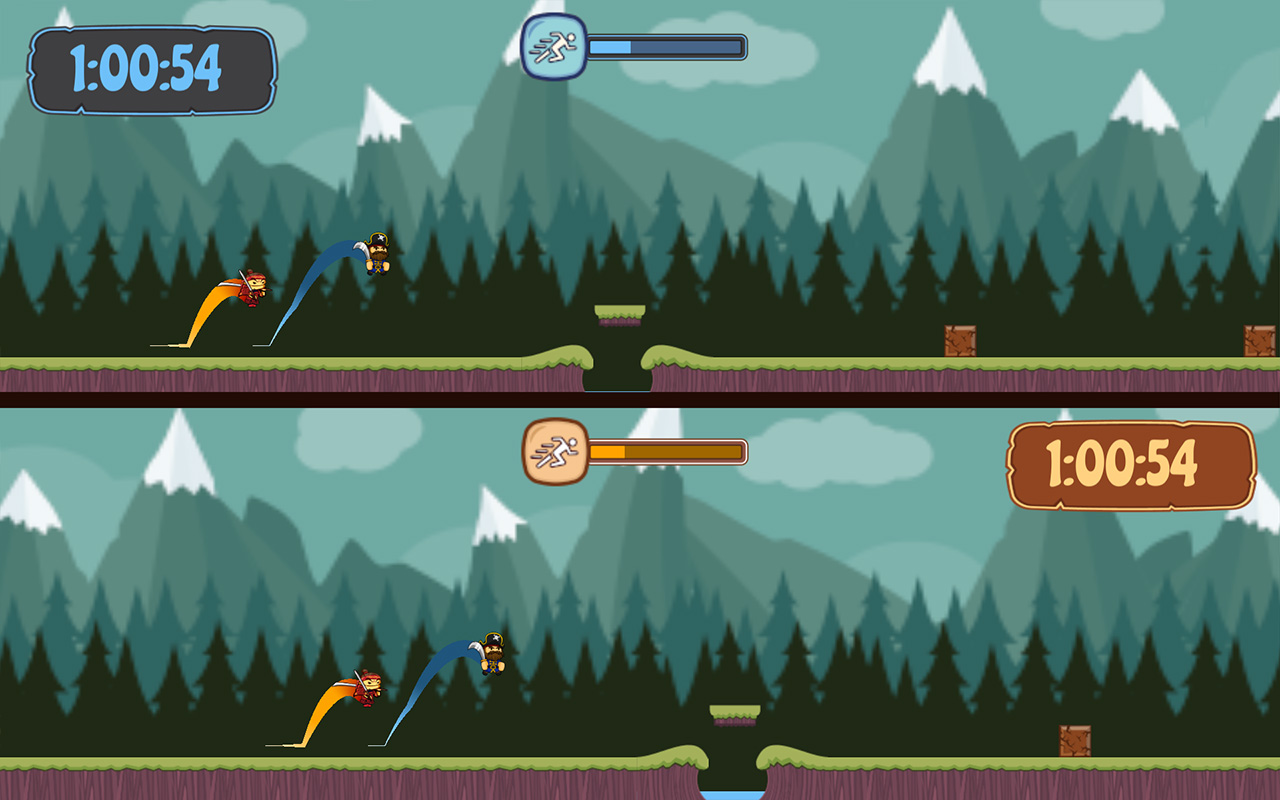 Work-in-progress: Gameplay (video coming).
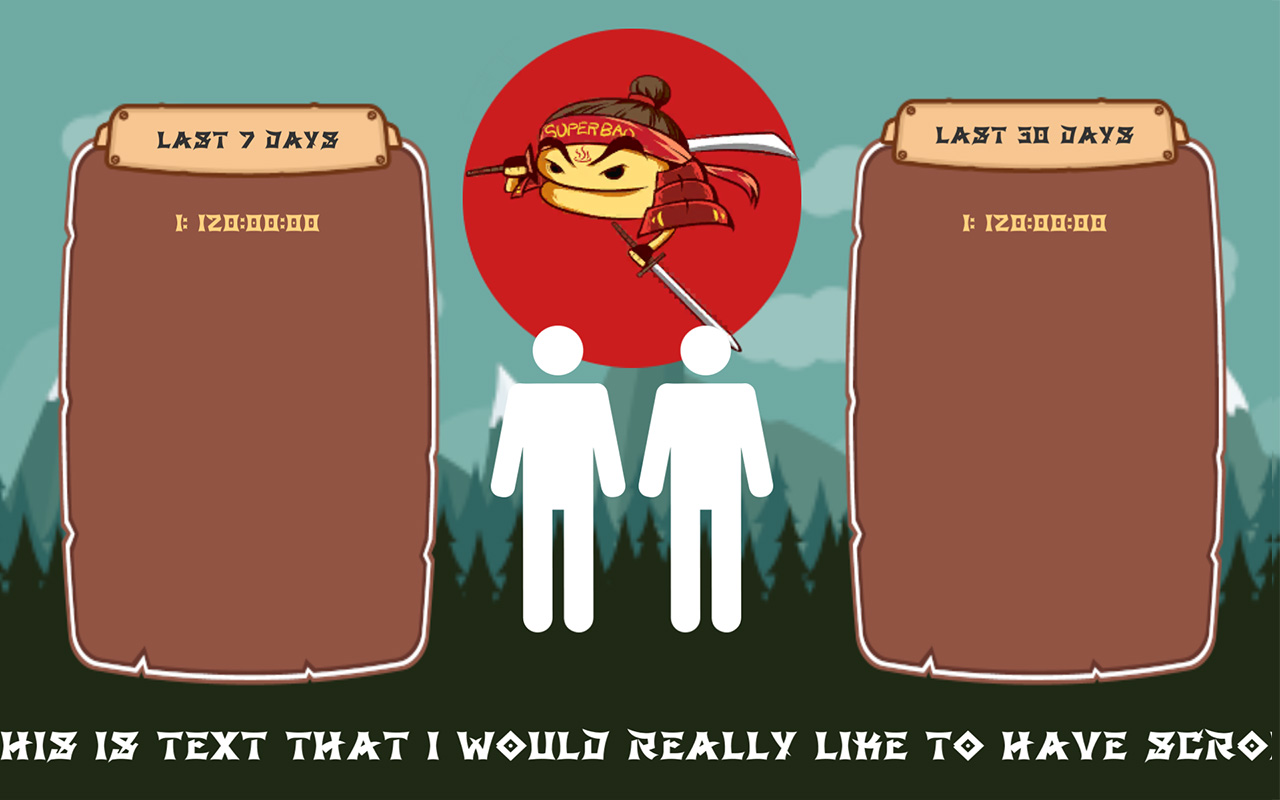 Work-in-progress: Hiscores – one of the several screens shown on the big, secondary display in each restaurant.